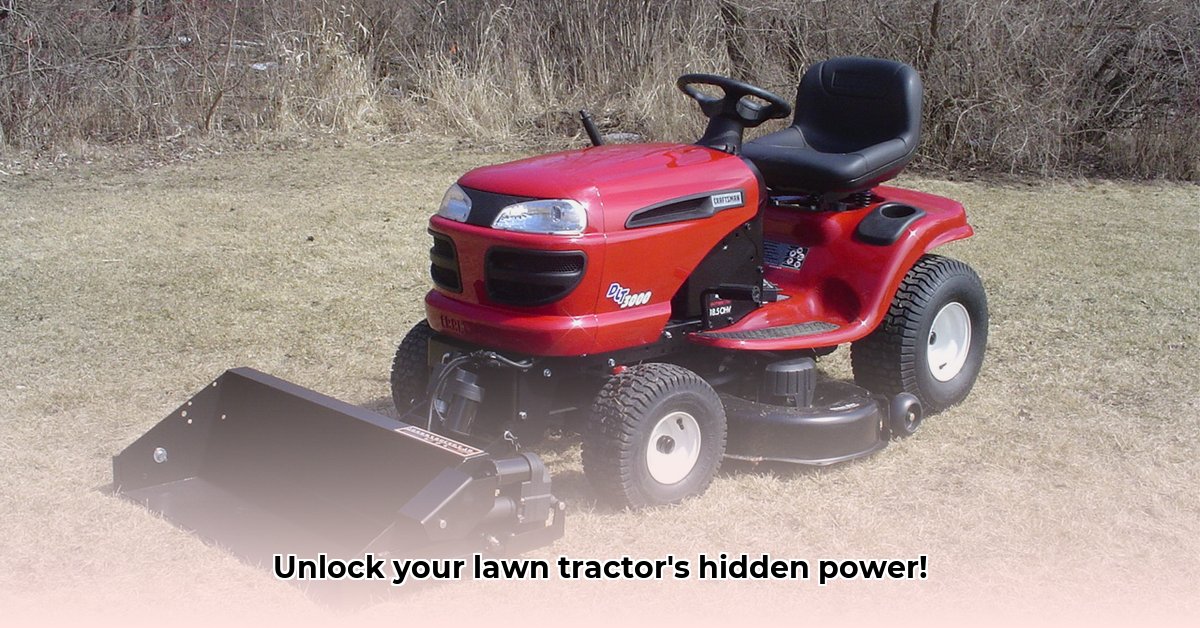
Lawn Mower Tractor with Bucket: Your Path to a Greener, Easier Yard
A lawn mower tractor with a bucket attachment is more than just a powerful mower; it's a versatile tool for sustainable land management. This guide provides a roadmap to maximizing its efficiency and minimizing your environmental impact. We'll cover selecting the right attachments, using them effectively, and implementing long-term sustainable practices. Don't just maintain your lawn – manage it responsibly. For even more attachment options, check out these compact tractor bucket hooks.
Supercharging Your Tractor's Efficiency: Matching Tools to Tasks
The effectiveness of your tractor-bucket system hinges on smart application. Before you buy any attachments, assess your property's needs. Do you regularly battle heavy snowfall? Do you have extensive leaf cleanup each fall? The right attachments can dramatically improve efficiency and reduce overall workload. For instance, a snowblower attachment saves time and fuel compared to manual shoveling, while a leaf collection system minimizes landfill waste. What are your biggest seasonal challenges? Choosing the right attachments directly addresses those specific needs.
Expanding Your Tractor's Toolkit: Beyond Mowing
The capabilities of a lawn tractor extend far beyond basic mowing. Consider these multifaceted applications:
- Heavy-Duty Hauling: Easily transport topsoil, mulch, firewood, and other materials, saving time and physical strain.
- Light Landscaping: Level small areas, move rocks, and tackle other minor landscaping projects with ease.
- Garden Assistance: Use specialized attachments for tilling, seeding, and other garden tasks, potentially reducing reliance on larger, more energy-intensive equipment. How will you leverage your tractor to boost productivity in your garden this year?
The Eco-Friendly Side of Tractor Power: Minimizing Your Footprint
While lawn tractors offer significant advantages, their environmental impact must be considered. Gas-powered engines produce greenhouse gases. Let's explore how to mitigate this:
- Maximize Fuel Efficiency: Regular maintenance is paramount. A well-tuned engine and sharp blades significantly improve fuel economy. Studies show regularly maintained equipment can improve fuel efficiency by up to 20%.
- Explore Alternative Fuels: In the long term, explore electric or alternative fuel options as they become more affordable and accessible. This transition is crucial for long-term sustainability.
- Invest in Durable Attachments: High-quality attachments reduce the need for frequent replacements, minimizing waste and saving money over time. Is your investment in long-lasting equipment paying off in reduced replacement costs?
A Sustainable Action Plan: Short and Long-Term Strategies
This step-by-step guide lays out both immediate and long-term actions for sustainable land management:
Short-Term Goals (Within the First Year):
- Comprehensive Needs Assessment: Identify the most beneficial attachments for your specific property.
- Efficient Mowing Techniques: Learn optimal mowing patterns to conserve fuel. Online resources provide numerous effective strategies.
- Preventative Maintenance: Regular servicing prevents costly repairs and maintains fuel efficiency. This is a crucial investment in the longevity of your equipment.
Long-Term Goals (3-5 Years and Beyond):
- Transition to Alternative Fuels: Gradually explore electric or propane models as they become increasingly viable options.
- Composting: Efficiently collect yard waste and create compost to enrich your garden soil naturally.
- Sustainable Upgrades: When replacing attachments, prioritize options made from recycled or renewable materials.
Risk Assessment Matrix: Proactive Problem Solving
Proactive planning minimizes potential problems. This matrix outlines potential risks and mitigation strategies:
| Risk Category | Likelihood | Severity | Mitigation |
|---|---|---|---|
| High Fuel Consumption | High | Moderate | Choose efficient models; optimize mowing habits; consider alternative fuels |
| Attachment Wear and Tear | Medium | Low | Choose quality attachments; store properly; maintain regularly |
| Accidental Property Damage | Low | High | Follow operating instructions carefully; always be aware of your surroundings |
Remember, responsible land management is about informed choices, both in equipment use and long-term decision-making. Your lawn tractor and attachments are valuable tools for achieving sustainable land management practices. By implementing these strategies, you can contribute to a healthier environment while maintaining a beautifully manicured lawn.
How to Reduce Environmental Impact Using Riding Mower Attachments: A Holistic Approach
Key Takeaways:
- Gas-powered lawn equipment significantly contributes to air and soil pollution.
- Electric mowers offer a cleaner alternative, but their lifecycle impact (battery production and disposal) requires consideration.
- Sustainable lawn care encompasses mower choice, energy source, and waste management.
- Riding mower attachments can enhance efficiency and reduce environmental impact.
"Sustainable lawn care isn't just about the machine, it's a mindset shift," says Dr. Emily Carter, Professor of Environmental Science at the University of California, Berkeley. "It’s about making informed choices that benefit both you and the planet."
Choosing the Right Equipment: Minimizing Your Environmental Footprint
Gas-powered lawn tractors are environmentally taxing. However, smart choices can lessen the environmental burden. Electric tractors are a cleaner alternative, akin to the difference between a gas-guzzler and an electric car. However, the lifecycle impact of electric mowers (battery production and disposal) must be considered. How can we mitigate this?
- Invest in durable, energy-efficient models: High-quality equipment reduces the need for frequent replacements, minimizing waste.
- Responsible Recycling: Utilize reputable battery recycling programs to ensure proper disposal, reducing environmental harm.
Attachments that Enhance Efficiency and Sustainability
Specific attachments boost efficiency and sustainability. For example, a bucket attachment enables efficient leaf collection, reducing reliance on polluting leaf blowers. Less tractor operation translates to lower fuel consumption. A dethatcher attachment improves soil health, possibly reducing the need for fertilizers. It's a synergistic approach! How are these attachments improving the long-term health of your lawn?
Sustainable Practices Beyond the Machine: Holistic Land Management
Sustainable land management requires a holistic approach:
- Reduce Lawn Size: Smaller lawns require less mowing, energy, and chemical inputs.
- Drought-Tolerant Landscaping: Choose plants that need less watering, conserving water resources.
- Responsible Waste Disposal: Proper disposal of used oil, filters, and mower parts is crucial.
- Smart Mowing Techniques: Mow at a higher blade height, reduce mowing frequency, and avoid over-watering to minimise soil compaction.
Long-Term Strategies: A Vision for Sustainable Landscaping
Long-term sustainability calls for broader action:
- Support Sustainable Manufacturing: Patronize companies committed to eco-friendly materials and manufacturing.
- Advocate for Responsible Policies: Support initiatives like extended producer responsibility (EPR) for equipment recycling.
- Embrace Innovation: Encourage research and development of alternative energy sources and lawn care technologies.
A Balanced Approach: Integrating Sustainability into Your Lawn Care
Sustainable lawn care isn't just about the equipment; it's a comprehensive approach. By making informed choices regarding equipment, attachments, and practices, you can significantly reduce your environmental impact while creating a thriving landscape.